

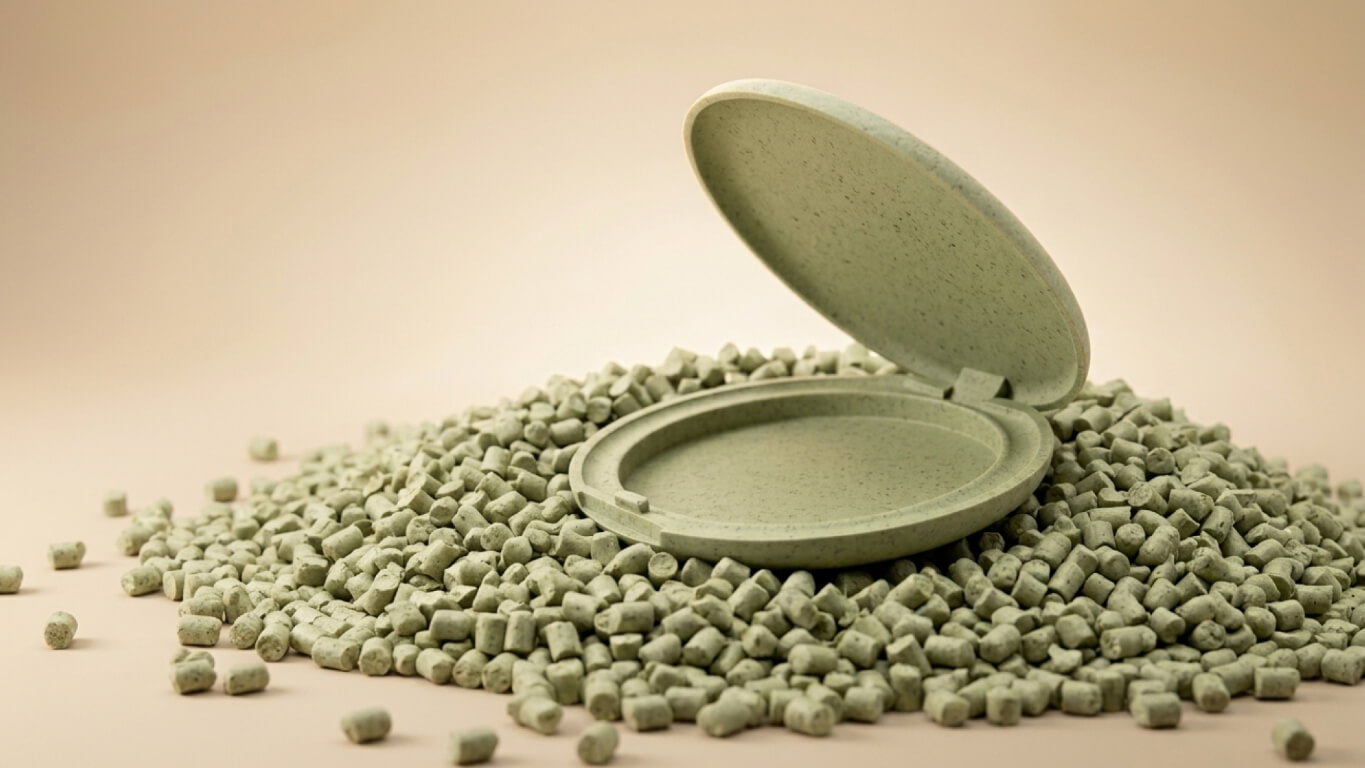
Material choice is often the first question beauty brands ask when starting a sustainability project, and two options come up repeatedly: bio based packaging and pcr plastic packaging. Both aim to reduce reliance on virgin fossil-based plastics, but they draw on very different sources, and understanding the distinction matters when specifying a new compact.
Bio based packaging uses materials derived, at least in part, from renewable feedstocks such as plant-based polymers, rather than from petroleum. Pcr plastic packaging, by contrast, is manufactured using post-consumer recycled plastic, material that has already served one useful life and is reprocessed into new components rather than sent to landfill. Marino Belotti evaluates both bio based packaging and pcr plastic packaging as part of its broader material strategy, alongside mono-material and lightweighting approaches, selecting the option that best fits a given compact’s technical and aesthetic requirements.
Where bio based packaging fits in a compact
Bio based packaging can be a strong fit for structural components that do not require the exact optical or mechanical properties of certain conventional plastics, though formulators and packaging engineers need to validate compatibility carefully, since renewable-content materials can behave differently under moulding conditions or with certain formula ingredients. Marino Belotti’s internal mould workshop and prototyping laboratory allow bio based packaging concepts to be tested and refined quickly, reducing the risk of surprises once a project reaches full-scale production.
The role of pcr plastic packaging in reducing virgin material use
Pcr plastic packaging offers a more immediately scalable path for many compact components, since recycled content can often be integrated into existing production processes with fewer formulation and moulding variables to manage than fully bio based packaging alternatives. The main challenge with pcr plastic packaging lies in sourcing consistent, high-quality recycled feedstock and managing any colour or surface variation it introduces, both of which Marino Belotti addresses through careful supplier qualification and CMF adjustments during the tailored compact solutions process.
Beyond bio based packaging and pcr plastic packaging, some projects also explore pla cosmetic packaging as a further renewable option, though material selection always depends on the specific formula, decoration and durability requirements of the compact in question. Read more about how these material strategies fit into the company’s broader approach on the innovation and sustainability page.
For brands weighing bio based packaging against pcr plastic packaging, the right answer is rarely either-or. Many of the most effective sustainability strategies for compacts combine both approaches across different components, guided by engineering feasibility as much as by environmental ambition.
Testing and validating new materials before scaling up
Whether a project moves forward with bio based packaging, pcr plastic packaging, or a combination of the two, testing at prototype scale is essential before committing to full production volumes. Renewable and recycled feedstocks can behave differently from virgin plastics under injection moulding conditions, affecting shrinkage, surface finish and colour consistency in ways that only become apparent once real samples are produced and evaluated. Marino Belotti’s internal prototyping capabilities allow these variables to be assessed early, so that a bio based packaging or pcr plastic packaging decision made at the design stage does not create unexpected quality issues once production begins at scale.
Supplier qualification is another factor that deserves early attention. Because pcr plastic packaging depends on a reliable stream of quality recycled material, and bio based packaging depends on feedstock availability and consistency, working with a manufacturer that has already vetted its material sources reduces the risk of supply disruptions later in a product’s lifecycle. This groundwork, done well before a launch date is set, is what allows sustainable material choices to hold up under real commercial pressure rather than remaining a promising idea that never quite reaches full-scale production.
Belotti has its roots in metal engraving and button production for the fashion industry. Follow us on Instagram